Black Friday special for Zoom whitening

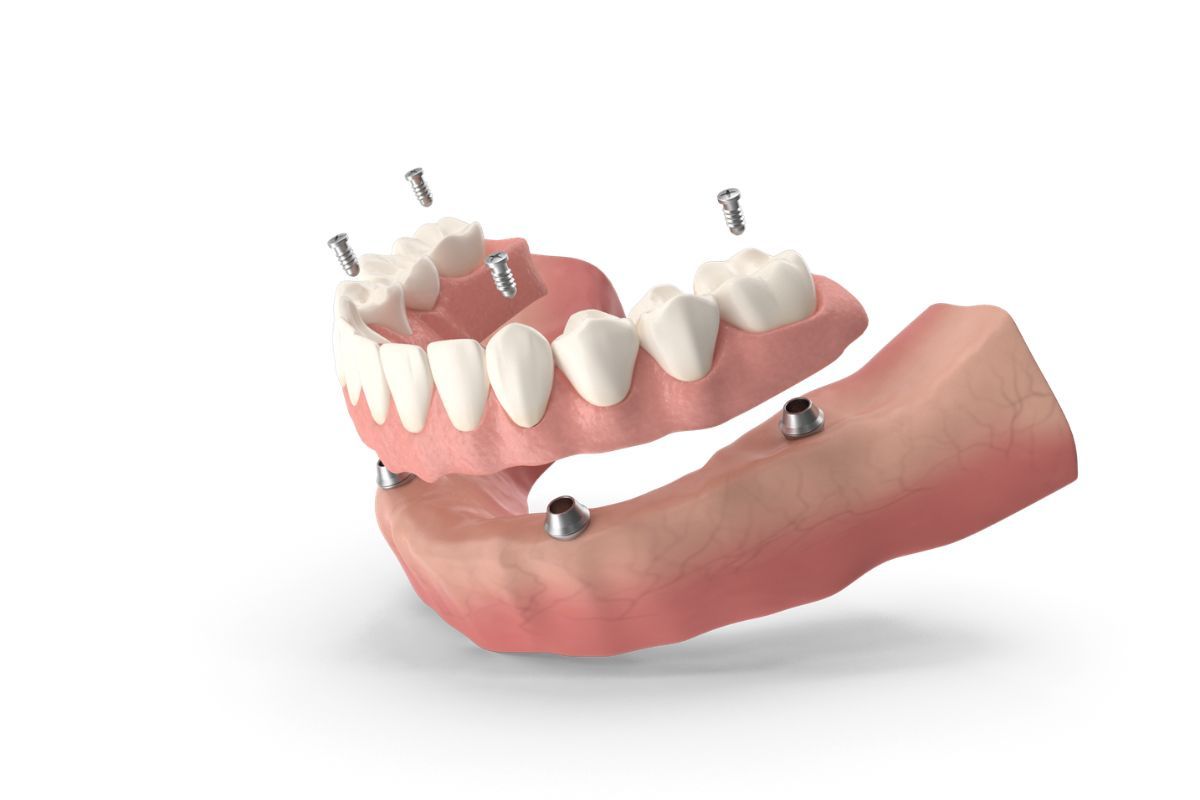
When you choose All-on-X dental implants, you are not only investing in your smile, you are taking a step toward better oral health. These cutting-edge implants, for the first time, make strong, permanent teeth replacement easy. They look natural and offer better functionality. Yet, like any dental work, they do need to be properly maintained to maximise their lifespan.
Taking care of All-on-X implants means both day-to-day cleaning and long-term care. Whether you are enjoying the vibrant community of Upper St. Clair or visiting family in nearby Pittsburgh, keeping your implants in perfect shape will ensure your new smile always looks fresh. This article shows you how to keep your All-on-X dental implants looking and feeling great for years to come.
Cleaning Tips for All-on-X Implants
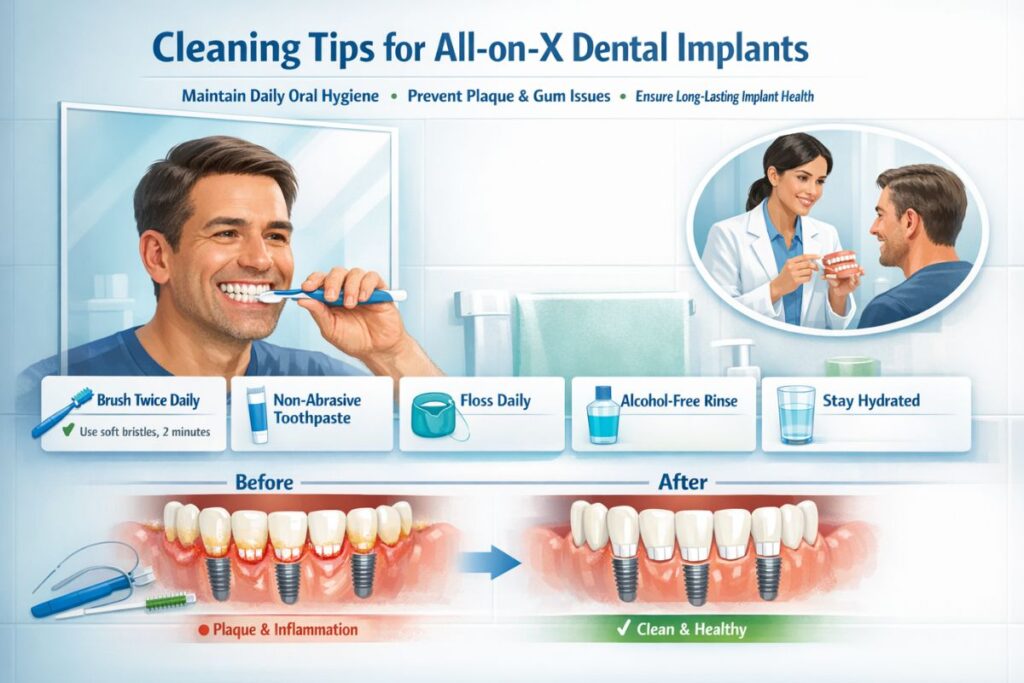
Cleaning your All-on-X dental implants is every bit as important as brushing your natural teeth. The good news is that caring for them doesn’t take much trouble; it’ll hardly be any different from what you’re used to with a little effort up front. Proper cleaning can eliminate plaque buildup around the gum line in particular, and maintaining this prevention will reduce your risk of infections or other gum problems.
1. Brush Twice a Day
As with natural teeth, brushing your all-on-X dental implants in Upper St. Clair twice daily is essential. Use a soft-bristled toothbrush to gently clean the implants, avoiding harsh scrubbing actions. Brush for two minutes, ensuring all surfaces of the implants and adjacent gums are covered.
2. Use Non-Abrasive Toothpaste
Choose a non-abrasive toothpaste since some formulations can be too rough on implants and cause scratches. There are toothpastes designed expressly for implants that are gentle but effective.
3. Floss Daily
Flossing all around implants like these isn’t easy, but it’s critical for removing food particles and plaque buildup. You might want to use special threaders and floss tailored to fit between your implants and gums. If you don’t know how to floss around your All-on-X implants, ask your implant dentist for advice.
4. Rinse with Mouthwash
Use an alcohol-free mouthwash that’s tailored to implants. This helps reduce bacteria in the mouth, freshen breath, and care for your gums. Be sure to rinse after brushing and flossing, and maintain overall oral hygiene.
5. Stay Hydrated
Drinking plenty of water throughout the day helps rinse food particles and bacteria off the surfaces of your implants. In addition, staying hydrated will promote healthy saliva production, which protects both your gums and implants.
Long-Term Maintenance for All-on-X Implants
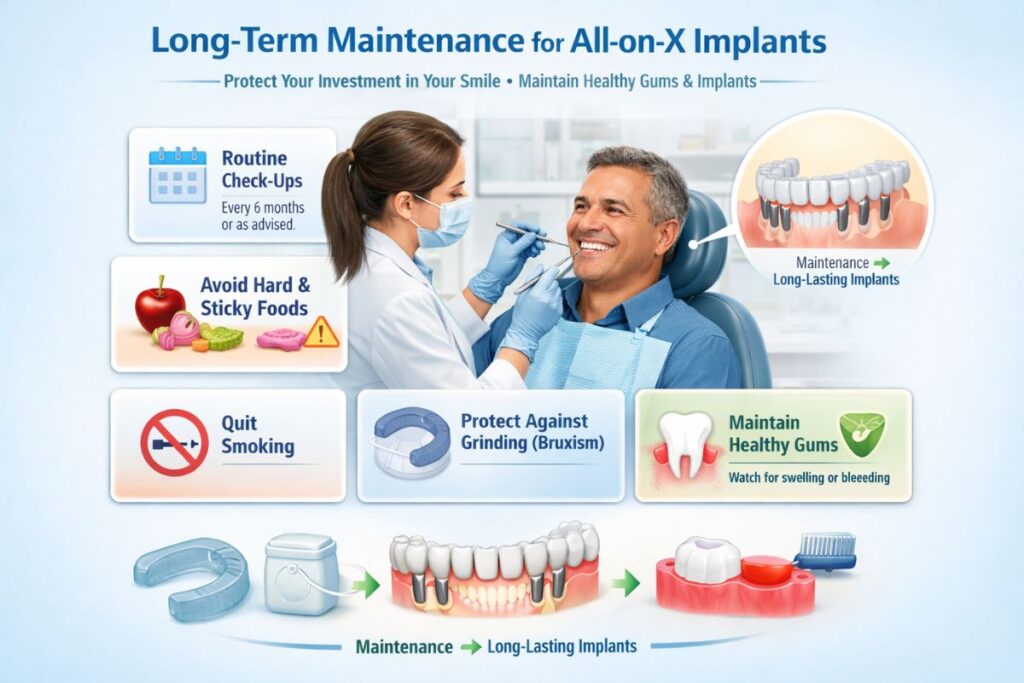
For All-on-X implants to last a lifetime, it is important to take good care of them. Making regular check-ups with your implant dentist in Upper St. Clair is essential to ensure your implants remain healthy and functional.
1. Regular Dental Exams
No Matter how artificial your implants seem, regular dental exams are necessary. Your dentist will examine the implants and the surrounding gum tissue for signs of infection or bone loss. Usually, these checkups occur every six months, but your dentist may suggest more frequent visits depending on your individual needs.
2. Avoid Hard or Sticky Foods
All-on-X Implants are designed to resist a great deal of pressure, but they are not invulnerable. Crunching on rocks is a definite no-no, and tough candies can lodge in or even dislodge the implants. Sticky foods such as caramel or bubble gum can also be a problem, as they can get caught between your gums and the implants themselves, making cleaning more difficult.
3. Pay Attention to Nail Clenching
If you’re grinding your teeth at night, your dentist may suggest a nightguard. Teeth grinding, also known as bruxism, places excessive pressure on both of your implants and their artificial crowns, as well as on the surrounding tissues.
4. Give up Smoking
Smoking is bad for everyone’s health, and it will do more harm than good to the longevity of your All-on-X implants. Tobacco use reduces the flow of blood to the gums, making it more difficult for the body to heal and maintain healthy tissues around implants. Quitting smoking can improve implant successes and lots more on the plus side, which helps you to live longer, too.
5. Gum Protection
Healthy gums are important for achieving All-on-X implants. Watch for any changes in your gum tissue, such as redness, swelling, or bleeding. These may be signs of infection or gum disease; either one can compromise the stability of your implants. If you spot any problems, call your dentist who placed your All-on-X implants to make an appointment right away.
When to See Your Dentist for Implant Issues
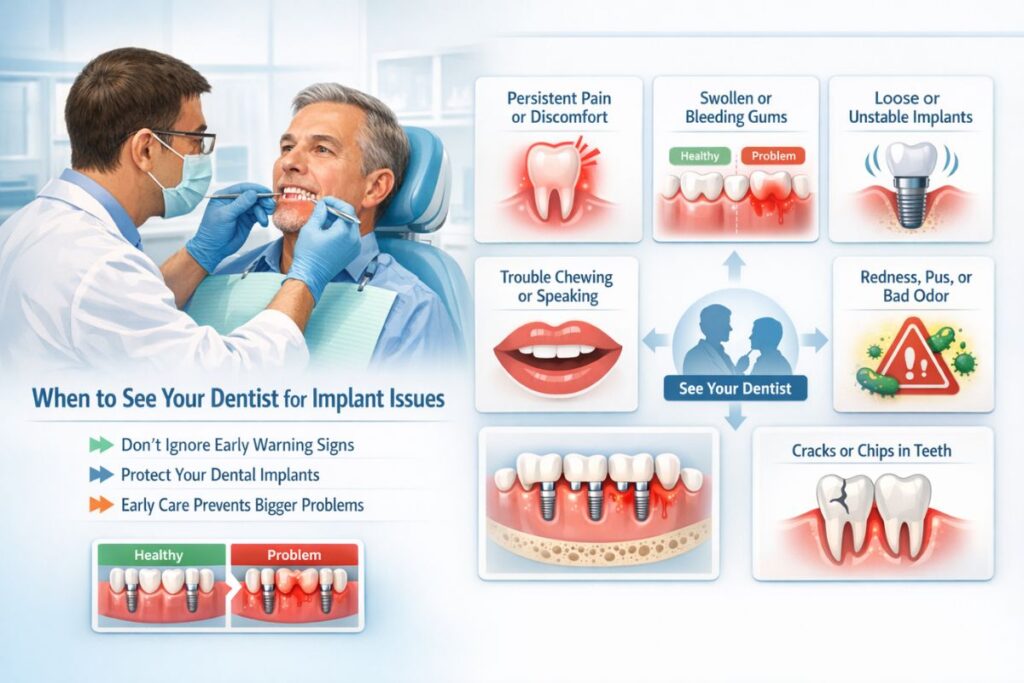
Although All-on-X implants are built to be tough and durable, you may need to see your dentist from time to time to ensure everything remains in good condition. It is possible to forestall major issues later by catching the early signs of these simply with preventive measures. Here are some common circumstances when you should call for an appointment with an implant dentist:
- Pain or Discomfort Around the Implants: What all this means is that if you have ongoing pain or discomfort with your All-on-X implants, you must go in to see the dentist. Sharp or constant pain left to itself is not good.
- Gum Swelling or Bleeding: Swelling or bleeding around your implants may signal periodontal disease or even an infection. At once, book an appointment if this happens, and do not let things get worse.
- Changes in Implant Stability: If your implants feel as if they are jumping around a bit and you usually lose them or feel them become unstable, it is imperative that you arrange a check-up immediately. This could signal bone or surrounding tissue problems deserving of professional attention.
- Difficulty Chewing or Speaking: If you find it hard to speak comfortably or chew, it may be a clear sign that your All-on-X implants have not been properly positioned. The problem can be appraised and corrected by a dentist to ensure everything is as it should be.
- Signs of Infection: Please note whether there is redness, pus, or a bad odor at the implant site. If you face these symptoms, seek medical help immediately to prevent further complications.
- Cracks or Chips in the Prosthetic Teeth: The artificial teeth attached to your dental implants may wear out over time. If you notice any cracks, chips, or other visible damage, a dentist can examine the prosthetic and repair or replace it.
Protect Your Investment for a Lifetime
Taking care of your All-on-X dental implants will ensure your investment in a beautiful smile lasts indefinitely. By closely following an everyday cleaning routine and maintaining consistent care practices, you can keep your implants fresh and sparkling. South Hills Dental Arts is here to lead you through the process and provide ongoing support to maintain the health and function of your implants.
Regular check-ups and proper maintenance are critical for catching problems early and ensuring your implant is successful in the end. Don’t wait, call us today to schedule an appointment. We’re here to keep your smile looking good for many years still to come.
Questions People Ask About All-on-X Dental Implants
How often should I clean my All-on-X dental implants?
It’s recommended to clean your All-on-X dental implants twice a day, just like natural teeth. Regular brushing, flossing, and mouthwash can help maintain oral hygiene and prevent plaque buildup.
Can I eat normally with All-on-X implants?
Yes, you can eat normally with All-on-X implants, but avoid hard or sticky foods that may damage the implants or get stuck between the prosthetics. Always follow your dentist’s guidelines for proper care.
Is flossing necessary with All-on-X dental implants?
Yes, flossing is necessary to remove plaque and food particles between the implants and gums. Use special floss or floss threaders designed for implant care to clean the hard-to-reach areas effectively.
What happens if I don’t properly maintain my All-on-X implants?
Poor oral hygiene can lead to plaque buildup, gum disease, or bone loss, all of which could jeopardize the success of your implants. Regular cleaning and checkups are crucial for maintaining implant health.
Can my All-on-X implants get cavities?
No, dental implants cannot get cavities, but the surrounding gums and bone tissue can still be affected by infection or gum disease. Proper oral hygiene is necessary to keep the surrounding tissues healthy.
How do I know if my All-on-X implants need attention?
Watch for signs of discomfort, gum redness, swelling, or bleeding. If you feel any of these symptoms, contact your implant dentist immediately to address potential issues before they become serious.