Black Friday special for Zoom whitening

If you live in Leetsdale and you’ve been considering Invisalign, you’ve probably asked the same question everyone asks: how long is this actually going to take? Understanding the Invisalign timeline is one of the most important parts of planning your treatment. The answer depends on several personal factors — but we can give you a very clear picture. This article covers average treatment lengths, what speeds things up, and what holds people back.
What Is the Average Invisalign Timeline?
Most adults complete Invisalign treatment in 12 to 18 months. That said, some cases wrap up in as few as 6 months. More complex alignment issues can extend treatment to 24 months or longer.
Teen patients may follow a slightly different schedule. Their treatment plans account for teeth that are still developing. Dr. Steven R. Crandall evaluates each patient individually before projecting any timeline.
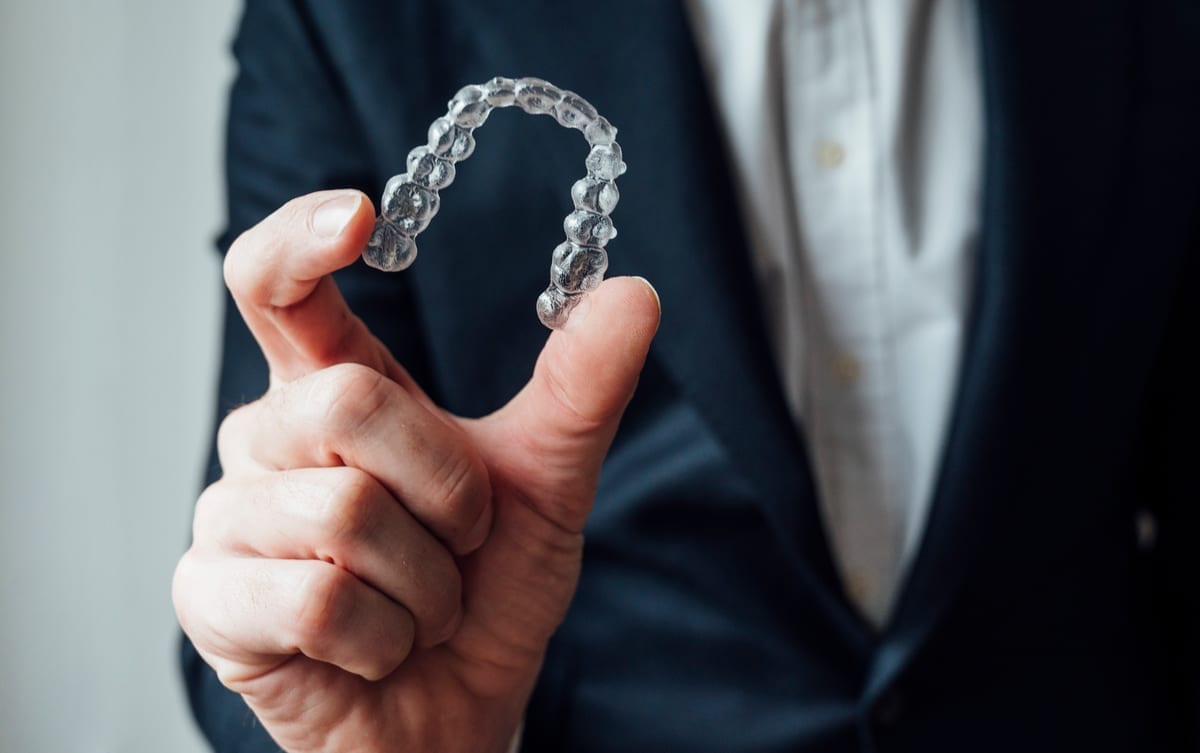
The number of aligner trays in your series is the clearest indicator of total treatment time. Each tray typically shifts your teeth over a two-week period. More trays simply means more weeks.
Key Factors That Affect How Long Invisalign Takes in Leetsdale
No two mouths are the same, and no two Invisalign timelines are identical. Several factors determine whether your treatment runs short or long. Knowing these upfront helps you set realistic expectations.
- Severity of misalignment: Mild crowding or spacing resolves faster than complex bite issues.
- Compliance with wear time: Aligners must be worn 20–22 hours per day. Skipping hours adds weeks to your total time.
- Age: Younger patients often see teeth move more quickly due to bone flexibility.
- Attachment use: Small tooth-colored buttons help aligners grip teeth and guide movement precisely.
- Follow-up appointment consistency: Missing checkups can delay progress and tray advancement.
Understanding these variables helps Leetsdale patients plan confidently. Your treatment plan from Dr. Crandall will outline the specific factors affecting your case.
What Actually Speeds Up Your Invisalign Results
This is the part most patients want to know most. There are concrete actions you can take to stay on track — or even finish ahead of schedule.
Wear your aligners religiously. The 20–22 hour daily requirement is not a suggestion. Every hour you skip is an hour your teeth aren’t moving. Patients who hit their wear time consistently move through trays faster.
Switch trays on schedule. Dr. Crandall will tell you exactly when to move to the next tray. Switching early doesn’t speed things up — it can actually cause problems. Stick to the prescribed schedule.
- Always remove aligners before eating or drinking anything except water.
- Clean your aligners twice daily to avoid buildup that weakens the plastic.
- Store aligners in their case when not in use — lost trays cause major delays.
- Attend every scheduled appointment at South Hills Dental Arts – Sewickley.
- Contact Dr. Crandall immediately if a tray cracks or feels wrong.
Accelerated treatment devices are also available for some patients. Ask Dr. Crandall whether tools like Propel or high-frequency vibration devices are appropriate for your case.
What Slows Down Invisalign Treatment
Just as important as knowing what helps — you should know what hurts your timeline. Several common behaviors cause treatment to stall or extend unnecessarily.
Removing aligners too often is the number one culprit. Taking them out for social situations, workouts, or convenience adds up fast. Even two extra hours off per day means 14 extra hours per week not moving teeth.
Forgetting to wear retainers after treatment is a separate but related issue. Teeth can shift back after Invisalign if retainers are ignored. That leads to revision trays and added treatment time.
Poor oral hygiene also creates delays. Food trapped under aligners accelerates decay. Treating new cavities mid-treatment can pause your aligner progression entirely. Brushing and flossing after every meal protects both your teeth and your timeline.
How Invisalign Compares to Other Alignment Options
Leetsdale patients sometimes wonder whether traditional braces or clear aligners from other brands would be faster. The honest answer depends on the complexity of your case.
Traditional braces often handle severe bite corrections more efficiently. However, Invisalign has closed the gap significantly in recent years. For mild to moderate cases, Invisalign timelines are now very comparable to braces.
Some patients combine cosmetic treatments after Invisalign. For example, Veneers can address surface staining or shape concerns that aligners don’t correct. Others explore Dental Implants to fill gaps before starting aligner treatment. Dr. Crandall helps patients sequence these treatments for the best outcomes.
What to Expect During Your Invisalign Journey at South Hills Dental Arts
Starting Invisalign at South Hills Dental Arts – Sewickley is a straightforward process. Dr. Crandall begins with a comprehensive exam and digital scans. These scans power the ClinCheck software that maps out every stage of your tooth movement.
You’ll receive your full series of trays — or trays in batches — depending on your case. Each checkup visit typically lasts 20 to 30 minutes. These short visits confirm that your teeth are tracking correctly.
If refinements are needed, don’t panic. Refinements are additional trays prescribed partway through treatment to fine-tune results. They’re common and don’t mean your treatment failed. They simply mean Dr. Crandall is committed to getting your results exactly right.
Frequently Asked Questions
How long does Invisalign take for mild crowding?
Mild crowding cases often complete in 6 to 12 months. The exact timeline depends on the degree of crowding, your compliance with wear time, and how your teeth respond to movement. Dr. Crandall will give you a projected range after your initial consultation.
What happens if I don’t wear my aligners enough each day?
Skipping wear time means your teeth don’t receive consistent pressure to move. This causes trays to feel tight longer and may require extending your treatment plan. Consistent 20–22 hour daily wear is the single most controllable factor in your timeline.
Can Invisalign treatment be faster for teens than adults?
In some cases, yes. Younger patients often have more malleable bone tissue, which can allow teeth to shift more readily. However, treatment time still depends heavily on the complexity of the case and compliance with wearing the aligners as directed.
Do I need retainers after Invisalign?
Yes, retainers are essential after any orthodontic treatment. Without them, teeth naturally drift back toward their original positions. Dr. Crandall will provide a retainer plan at the end of your Invisalign treatment to protect your results long-term.
Is Invisalign faster than traditional braces?
For mild to moderate cases, Invisalign and traditional braces have comparable timelines. Complex bite correction may still be faster with braces. The best way to know is to schedule a consultation with Dr. Crandall, who can evaluate your specific alignment needs.
At South Hills Dental Arts – Sewickley, Dr. Crandall and the team guide Leetsdale patients through every step of the Invisalign process with clear expectations and personalized care. You deserve a smile you’re proud of — and a realistic plan to get there. Book Now to schedule your appointment with our team.